
Fix the Workflow Before You Buy the Platform

There's an old line often credited to Bill Gates: automation applied to an efficient operation magnifies the efficiency, and automation applied to an inefficient one magnifies the inefficiency. Executives nod at that line and then go buy the platform anyway.
I get it. Buying software feels like progress. Redesigning a workflow feels like a meeting.
Why should process improvement come before technology?
Process improvement before technology matters because software hard-codes whatever process you give it. If your approval flow has four unnecessary handoffs, the new system will route those four handoffs beautifully, forever. Now you've paid for the waste and locked it in.
Fixing the process first usually shrinks the requirements list, which shrinks the price, the implementation time, and the change management burden.
What does a broken workflow look like?
The same data gets typed into two systems
Work waits in someone's inbox longer than it takes to do
There's a spreadsheet that "everyone knows not to touch"
Approvals exist because of one bad incident years ago
Nobody can explain why step four exists
If two or more of those sound familiar, the platform isn't your first problem.
A before-and-after test you can run this week
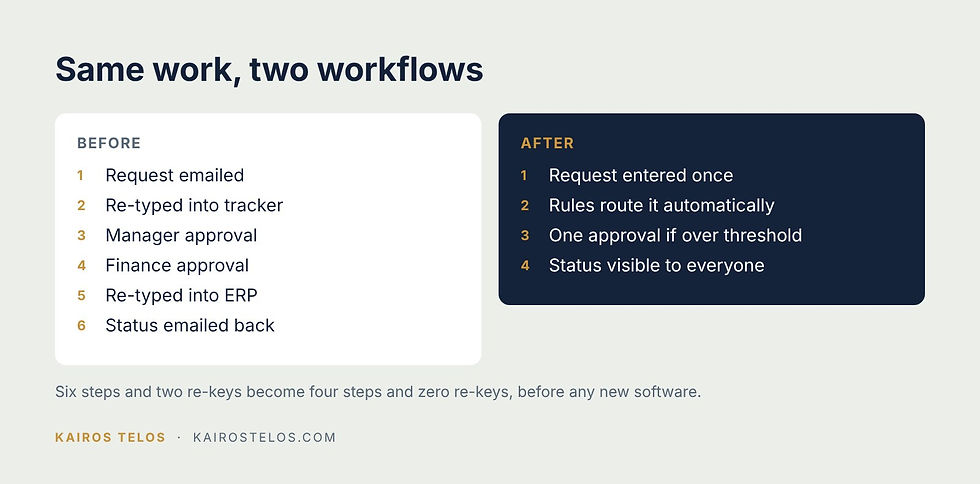
Walk one real piece of work through the process with the people who do it. Count the steps, the handoffs, and the waiting. Then ask the team to redesign it on a whiteboard as if no system existed. The difference between those two pictures is the value you'd be paying a vendor to ignore.
Software doesn't fix a process. It freezes one.
When is technology the right first move?
When the process is sound and the bottleneck is volume, speed, or accuracy that people physically can't deliver. That's the moment automation earns its keep. It's the same logic behind starting with clear use cases, which I covered in Stop Chasing Shiny AI Objects.
The takeaway
Before your next platform decision, map the workflow on one page and cut what doesn't belong. Then write the requirements. It's the least glamorous step in operational excellence, and usually the most valuable one.
Frequently asked questions
Should you automate a process before improving it?
Usually not. Automating an inefficient process locks the inefficiency in. Simplify and standardize the process first, then automate what remains.
How do you map a business process quickly?
Follow one real transaction from start to finish with the people who do the work. Note each step, handoff, and wait time on a single page.
What is the biggest sign a workflow needs redesign?
Work spends more time waiting between steps than being worked on. Long queues and repeated data entry are the clearest signals.
Thinking about a new platform? Let's look at the workflow first.


Comments